GAP for Growers
A farmer who practices Good Agricultural Practices implements proactive food safety control measures to prevent crop contamination. GAP guidelines can be grouped into four categories; health and hygiene, water quality, soil supplements, and environmental hazards. A brief discussion of each is discussed.
Health and Hygiene – Growing fresh produce requires a significant amount of hand contact during harvesting, sorting, and packing. A worker who shows signs of diarrhea, vomiting, or sudden yellowing of the skin or eyes may have a disease that can be transmitted through food and should not handle fresh produce. Every food handler should wash his or her hands before starting work, after breaks, and especially after using the restroom. It may be difficult to provide the necessary sanitary facilities, but clean, accessible, and appropriately stocked restroom and hand washing stations are essential for preventing product contamination.
Water quality—Water has a many pre- and post-harvest uses for irrigation, pesticide application, washing harvested produce, cleaning harvest containers, and for drinking and hand washing. Food safety risks are greatest when surface water from ponds, streams, or rivers comes into contact with the edible parts of fruits and vegetables. Ground or well water is usually a safer choice, but it should be tested regularly and wells should be inspected to make sure they are intact and not located in areas that are subject to runoff during storms or floods. Municipal water is the safest source because you can be sure it has met government safety requirements. The choice of water to use and the level of risk is determined by the timing and application method. For instance, a safer source of water should be used as harvest time approaches or when overhead irrigation is used since the edible portions of the plant is likely to come into contact with the water just before harvest. Water used after harvesting should be free of human pathogens. If the safety of the water is in doubt, a sanitizer should be added to the water.
Soil supplements—Healthy soils contain abundant populations of microorganism and most are harmless to people. In fact, they are beneficial to crops because they break down organic matter into more readily available plant nutrients. However, when animal manure is used as a soil conditioner or a source of nutrients, contamination risks increase. It should be assumed that all raw manure contains microorganism that can make people sick. Therefore, proper manure management and application techniques are essential. If raw manure is applied to fields where fresh produce is grown, allow a minimum of 120 days between manure application and harvest. Working it into the soil in the fall of the previous year is even better since long term exposure to the elements greatly reduces pathogen levels. A better choice when using animal manures is to follow established aerobic composting techniques that will raise core temperatures to above 130oF for at least 5 days. Turn the pile several times to ensure even heat exposure to all parts of the pile. It is also important to store raw and incompletely composted manure as far away as possible from crop growing areas and to prevent runoff after heavy rains or flooding.
Field and Packinghouse Hazards—Farms and packing houses are by no means sterile environments and there are ample opportunities for contamination from harvest equipment and containers, harvest implements, packing equipment, storage facilities, and during transportation. Growers need to be aware of potential contamination sources from adjacent properties such as junk yards, toxic waste sites, and dairy or cattle operations and, to the extent possible, keep wild animals away from the crop. Harvest containers and totes should be cleaned before each use and stored so they are protected from sources of contamination.
The voluntary recommendations described above are applicable to all fresh produce growers. But growers who supply fresh produce to grocery stores and restaurants are increasingly being asked to supply documented evidence that GAP standards are being followed. An inspection from an independent third party auditor is typically required at some point during the harvest season.
There are resources available to those who have received certification notices from their wholesale buyers. A new United States Department of Agriculture audit service is available that is supported by funds from the Pennsylvania Department of Agriculture. Currently under development from Penn State Extension and the Department of Food Science is a training program that will help growers understand farm food safety risks and develop a food safety plan.
Top
What Growers Should Know
Growers can minimize the pre-harvest risk of contamination from pathogen sources such as irrigation water, green or inadequately composted manure, or wild animals, through the following GAPs practices:
Irrigation and Spray Water Quality
 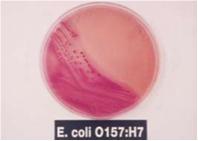 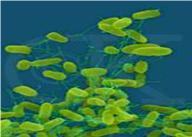
E.coli and Salmonella
- Irrigation water is from a capped well in good condition that can be readily treated if indicator organisms are detected in annual water test.
- Source of water for topical sprays is from a capped well in good condition that can be readily treated if indicator organisms are detected in annual water test.
- All water sources are tested for indictor organisms such as thermo tolerant coliforms and generic E. coli with records kept on file.
- Findings and efforts of local watershed committees are known.
- Records are kept of monitoring of sediment levels in surface water used for irrigation.
- Irrigation method used for fresh produce is known to be free from pathogens.
- Backflow prevention is in place with no cross connections between water supplies.
- Self-assessments or consultant assessments are made (and documented) to reduce negative environmental impacts of farming practices.
On-Farm Wells
- Well casing and well cap seal condition is good.
- Recommended well-casing depth is verified with local health department.
- Records are maintained of location and maintenance of on-farm septic systems.
- Records are kept of well positions and distances in relation to potential contamination sources (e.g. fertilizer or pesticide storage and handling areas, livestock yards, septic leach fields, manure piles, fuel storages, direction of surface water runoff, and diversions of surface water runoff).
- Record/diagram exists of anti-backflow or check-valve devices on plumbing (indicate if cross connections exist between water supplies).
- Records of all annual water tests are on file (tested for nutrients and chemical/microbial contaminants).
Manure Sources and Application Practices
- Manure handling documentation from provider is on file.
- Only mature-animal manure is applied to produce fields (never from young, immature animals).
- Time between manure application and harvest is always maximized.
- Pathogen contamination risks on recently manured ground are considered when making crop choices. (For example, never plant lettuce or root crops on recently manured ground).
- Manure teas are never used.
- No manure is used to side dress produce crops.
- Barriers are used to reduce manure runoff or movement to surface water sources, to minimize risks of pathogen contamination of water used by downstream neighbors.
- Produce is not grown in fields that might receive manure run-off.
- Manure is never spread to fields that are water saturated, prone to flooding or runoff, and is not spread on frozen or snow-covered ground.
- Detailed records are kept of manure use.
On-Farm Manure Storage and Handling
- Manure storage areas are isolated from produce fields and handling facilities.
- Proper slurry storage periods are observed, prior to field application.
- Manure storage facility is covered, and there is no opportunity for liquid runoff.
- Surface diversions are present to prevent clean water from entering manure storage.
- There are records of slurry storage engineering design and inspection, with emergency plan for pit failure or spills.
- There are records on file of farm environmental impact assessment, with record of necessary changes made.
Compost Sources and On-Farm Storage
- Compost handling documentation from the provider is on file.
- Records of composting conditions for manure and bedding are on file.
- On-farm compost storage is secured, prior to land application.
Compost Application Practices
- No compost teas are used.
- No produce crops are side dressed with compost.
- Barriers are in place to reduce compost runoff or movement to surface water sources.
- There is detailed record keeping of compost use.
Top
Herd Health
- Standard operating procedures (SOPs) or protocols are written to protect herd health and are updated continuously based on consultant or vet advice, all of which are recorded.
- Manure handling of young or new animals is separate from older animals, clean water movement on-farm is protected through containment of barnyard runoff, restriction of Hygiene
- Workers receive training on hand washing and personal hygiene for food safety.
- Management exists of worker training programs on food safety and personal hygiene.
- On-farm signage of personal hygiene requirements is posted – instructions for hand washing and personal hygiene for food safety in English and non-English (diagrams for benefit of illiterate workers).
- Worker illness is reported, as required.
- Records are kept of worker training.
Harvest and Post-harvest sources of contamination are addressed under GAPs as follows Harvest Sanitation
- Workers are trained regarding quality and grade of harvested product.
- Harvest aids, field packing equipment and machinery are washed and sanitized daily.
- Workers practice proper hand washing.
- Gloves are used properly while harvesting.
- Proper procedures are followed when loading field bins. (Workers are not allowed in bins.)
- Harvesting, packing and shipping containers are new or clean and sanitized prior to each use.
- Containers used for packing produce are properly stored.
- Soil is removed from produce and bins in field. Bins are cleaned and sanitized prior to field use.
- Written SOPs exist for all aspects of field harvest sanitation, with documentation that SOPs are being implemented.
Post-harvest Packing House Sanitation and Safety
- Written SOPs for pest control of rodents, birds and insects in storage and packing areas, with daily inspections and records.
- Soil is removed from produce and bins in field.
- Overhead light bulbs are screened or covered.
- Backflow devices are in place to protect water source.
- Written SOPs exist for packing line sanitation and damage inspection, with daily inspection records.
- Good grade oils and lubricants are used.
- Proper storage of containers used for packing and shipping ensure containers are not exposed to rodents, dust or condensation.
- Cull pile management occurs at proper location, with daily composting or appropriate removal.
- Workers practice proper hand washing.
- Gloves, smocks and aprons are properly worn during packing.
- Shipping trucks are properly sanitized, with recorded documentation.
- There are written SOPs for all aspects of packing house sanitation, with records of routine verification of practices.
Post-harvest Handling of Produce
- Soil is removed from produce and bins in field to prevent contaminating wash water or other loads of produce.
- Potable-quality water is used for washing produce and making ice, with results of annual water test on file.
Top
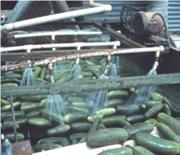
Proper cleaning of produce before storage
- Water quality in dump tanks, flumes, hydro coolers or other batch-water tanks is monitored several times a day, with appropriate chlorine or other disinfectant levels maintained for each particular crop. Water pH is monitored and adjusted to correct levels.
- There are written SOPs for temperature management of water in dump tanks (no more than 10˚ F cooler than produce).
- Records are maintained of scheduled cleaning of ice storage and handling facilities.
- Backflow devices separate dump tanks from water source.
- Harvesting, packing and shipping containers are new or clean and sanitized prior to each use
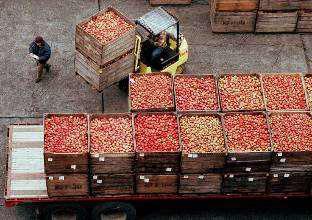
Proper Storage of produce
- Proper storage of containers used for packing and shipping ensures containers are not exposed to rodents, dust or condensation.
- A cold chain is maintained to minimize growth of pathogens, with records of monitored temperatures.
- There are written SOPs for cleaning of temperature-controlled produce storage, with records to verify implementation.
- There is proper refrigerated- or cold-room loading and management.
- Refrigerated or temperature-controlled trucks are used to move produce optimizing crop post-harvest quality. Temperatures are printed on manifests to ensure maintenance of the cold chain. Temperature monitoring records are kept.
- Prior to loading produce, shipping vehicle is inspected for cleanliness, odors and debris, and cleaned and sanitized, if needed. Records are kept.
- A trace-back system is implemented on the farm, coding for field, harvest date and crew, with records maintained for access by grower, auditor or inspector.
- Farm records demonstrate adherence to SOPs and scheduled protocols, such as monitoring of restrooms, worker training, product coding, and postharvest sanitation. When variations in protocols occur, they are noted in the records. All farm records are verified by management and kept on file.
- Product identification is in place for each piece or container of produce shipped from the farm. It is coded to allow tracing from field or origin to the distributor. The coded lot numbers are included on the bill of laden.
- Records of results of annual self-assessments, including action plans and dates of implementation, are kept on file.
- A written recall plan is updated and reviewed regularly by farm management and employees. Copies of the plan are filed with farm support services, including lawyers and distributors.
- The written recall plan includes names of employees to serve as recall team leaders, process for notification of the public and regulatory agencies, procedures for implementing the recall, strategies for handling recalled produce and methods for verifying recall plan effectiveness.
- Recall Notification Contacts include current phone and fax numbers for the key farm personnel, produce buyers and distributors, and farm support agencies. Notification will include request that all contacted parties reply to the notice.
- A mock recall is conducted on the farm to test the recall strategy and verify trace-back procedures.
- Records of any customer complaints, responses and actions taken to fix problem are keep on file.
Farm Bio-security
- Farm and packing shed buildings are locked when not occupied. Access keys are restricted to designated farm personnel.
- Visitor protocols limit and monitor access of all non-employees. These protocols are documented and all employees are aware of them.
- Standards for employee hiring are developed with consideration for biosecurity.
- All employees are trained to notify their supervisor if they see suspicious vehicles or people, unusual product or suspicious packages on the farm, in the packing shed or around farm buildings.
- Public Health, Security and Bioterrorism Preparedness and Response Act of 2002–Farm owner, operator or manager is aware of the act and understands how their operation is affected.
- Farm operation qualifies as a food production facility under this act and has been registered.
Top
Crisis Management
- Farm owner/operator has received crisis management training, and a written crisis management plan is in place.
- The farm has individuals who have media training and are familiar with farming operations to answer questions from the media. These individuals are familiar with all farm food safety protocols that are in place to prevent problems.
- The farm has a crisis management team designated and a plan to assign employees to different tasks should a crisis occur. Each critical person has a backup.
- Employee training includes discussion of the crisis management plan and employee responsibilities in the event of a crisis.
- The crisis management plan outlines which operations must continue and those that can be temporarily halted during a crisis.
- The crisis management plan includes a list of all priority contacts that support or provide services to the farm in the event of a crisis including lawyers, grower organizations, state health officials and vendors.
- A mock crisis has been conducted to insure the plan is effective.
Pesticide Use
- Pesticides are applied according to label directions and at less than label rates when effective.
- A spill kit is readily available near mixing area. A holding tank for rinsate is available. Excess material and rinsate is used according to label instructions.
- A spill response plan is written, updated and routinely reviewed by farm management and employees. Phone numbers of emergency response personnel are posted near all phones and authorities are notified immediately after a spill of a hazardous compound.
- SOPs are written for maintenance, calibration and inspection of spray equipment.
- Records of spray equipment maintenance are kept.
- A drift management plan is written and followed.
- Records of all pesticide applications are kept on file (includes date, chemical and trade name, EPA registration number, rate applied, weather conditions, stage of crop, target pest, area treated and name and certification number of applicator).
- Crops are inspected for pests during critical periods of crop and pest development. The farm uses IPM and pesticides. Pesticides are only applied when pest populations are large enough to cause economic losses.
- Spray water is from a municipal, treated water source or from ground water obtained from a properly constructed, capped well, in good condition, that could be readily treated if indicator organisms were detected in annual water tests.
- Any person who handles and applies pesticides is a certified applicator.
- All pesticide applicators have access to and wear proper safety equipment for applying pesticide.
- The pesticide storage area is locked and used only for pesticides.
- Pesticide storage area is designed with impermeable shelves over and impermeable floor with curbs or dikes to contain leaks or spills. There is no floor drain or drain is to an acceptable holding tank.
- Signs are posted notifying of pesticide applications. Workers are prevented from re-entry to fields until the re-entry period has expired.
- No produce is harvested until the legal number of days, post application, as stated on the pesticide label.
- Proper pesticide container disposal is followed.
Personal practices
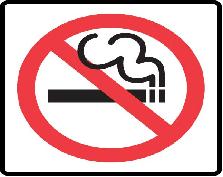
- Smoking, eating chewing gum, drinking beverages, or using tobacco should be confined to areas away from the growing area
- If there is a significant risk for contamination, policies should be established to minimize this risk.
Top
|
