Introduction
Advantages of patenting
Procedure of patent application
Patent offices in India
TNAU and Patenting
Introduction
Top
IA patent is an exclusive monopoly right granted by the Government for a new invention to an inventor for his/her disclosed invention for a limited period of time. This exclusive monopoly right is valid only within the territorial limits of a country of grant. Exclusivity of right implies that no one else can make, use, manufacture or market the invention without the consent of the patent holder. This right is available only for a limited period of time
Requirements of Patenting
It is important to remember
-
A patent has a time limit (20 years)
-
A patent has a geographical limit
-
A patent is restricted to the claims made in the application
Patenting in India – Old and under the New Act
| Item |
Old Act (1970) |
New Act (2005) |
| Human Life / Genes |
Not patentable |
Not patentable |
| Plants and animals |
Not patentable |
Not patentable |
| Microorganisms |
Not patentable |
Patentable |
| Non biological processes |
Patentable |
Patentable |
| Non biological products |
Not patentable |
Patentable |
| Biochemical and biotechnological process |
Patentable |
Patentable |
| Bio products |
Not patentable |
Patentable |
| Crop varieties |
No protection |
Protection under PVPFR |
| Animal varieties |
Excluded |
Excluded |
| Method of Agriculture and Horticulture |
Not patentable |
Products and process qualifying for novelty are patentable |
Advantages of Patents
Top
Example of Indian Legal cases
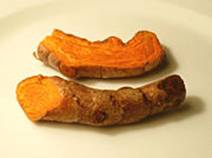
Turmeric: In 1995, two non resident Indians at the University of Mississippi Medical Centre, Jackson, (Suman K.Das and Hari Har P.Cohly) were granted a US patent (patent number 54015041) for turmeric to be used for healing wounds. The Indian Council for Scientific and Industrial Research (CSIR) filed a re-examination case with the US Patent Office challenging the patent on the grounds of “prior art”, i.e. existing public knowledge . The claim had to be backed by written documentation claiming traditional wisdom. CSIR submitted a document proof in the form of research paper published in 1953 in the Journal of the Indian Medical Association. The US Patent Office upheld the objection and cancelled the patent in 1997
Inventions can be patented if they satisfy three criteria:
-
Novelty
-
Non-obviousness
-
Marketability and Utility
The turmeric case failed to meet the novelty and non-obviousness criteria
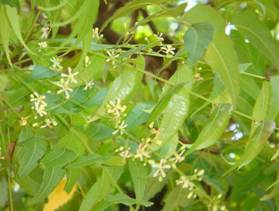
Neem: Neem (Azadirachta indica) is a tree from India and other parts of South and Southeast Asia. Neem is used as natural medicine, fungicide, pesticide and fertilizer and so, it has attracted a considerable amount of international interest
In 1994, the European Patents Office granted a Patent (patent number 436257) to the US chemical multinational company WR Grace & Co. and USDA for preparation of a fungicide derived from the seeds of the Neem
Dr.Vandana Shiva, Director, Research Foundation for Science, Technology and Ecology produced the evidence of farmers using this knowledge for a long period and also gave the evidence and information of two Indian scientists conducting research on fungicidal property of Neem before the patent had been granted. European Patent Office revoked the patent in 2005.
Basmati: Basmati is top-quality rice from the Punjab provinces of India. The word means “fragrant earth”, and the rice is a slender aromatic and long grain variety that originated in this region and is a major export crop. In 1997, the US Patent Office granted a patent to US firm Rice Tec Co. (patent number 5663484) for a variety called Texmati rice (20 claims).Texmati rice has 16 claims similar to Indian Basmati rice . As per Geographical Indication, Basmati is an Indian Rice Variety which could not be patented by other country.
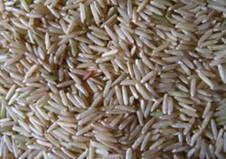 US patent could affect annual basmati exports of India and thus threaten the livelihood of thousands of Punjabi farmers. The brand name of Indian Basmati will be largely affected. Agricultural and Processed Food Products Export Development Authority (APEDA) filed for revocation of the patents granted to Rice Tec Co. by the US Patent Office. Evidences from IARI, New Delhi and Directorate of Rice Research, Hyderabad proved that 16 claims are similar to traditional Indian Basmati rice. Rice Tec Co. withdrew these 16 claims. However US Patent Office has not revoked the patent. The patent was issued to Rice Tec Co. with just 4 claims.
For more information: http://www.american.edu/ted/basmati.htm
Ponni:A rice dealer in Malaysia has obtained the ‘Ponni’ Trademark for a rice variety. Improved white ponni is a variety released by TNAU in 1986 In this context TamilNadu Agricultural University is preparing to challenge this trademark.
The Union Government has decided to formally contest the grant of registration for ‘Ponni’ rice as a trademark to a Malaysian company, Syarikat Faiza Sdn. Bhd. “We have authorised a legal firm to appeal against the registration. They will be doing so shortly,” Mr Asit Tripathy, Chairman of the Agricultural & Processed Food Products Export Development Authority (APEDA), told .APEDA has engaged K&S Partners, a Delhi-based intellectual property attorney, to file a cancellation application with the Malaysian Trade Marks Registry for removal of ‘Ponni’ from the register. (Govt to contest ‘Ponni’ trademark to Malaysian firm, The Hindu, Business Line, Aug 7, 2008)
-
In case, the Patentee is not able to work the invention commercially, he would be able to make a profitable use of his invention by selling his patent or by granting license to others, permitting the use of his invention
-
Patent System helps for industrial growth by introducing new technologies
-
The scientific knowledge contained in the patent specification helps as a “stepping stone” for further research
-
Patents provide inventive and creative ideas for further R & D in the field.
-
Patent acts as tradable industrial asset for the enterprise and, thus the strength of patent portfolio of the company is the indication of the good economic health of the company.
-
After the term of patent is over, or patent is not kept in force, the patented invention is available to the public for free use.
Procedure for patent application
Top
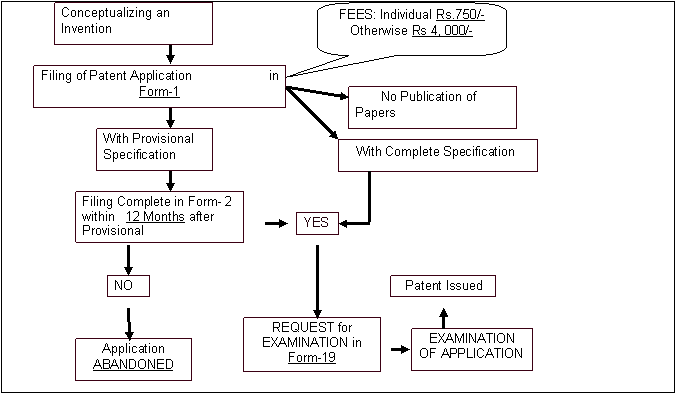
There are two types of patent documents usually known as patent specification, namely
- Provisional Specification and (ii) Complete Specification
Provisional Specification
A provisional specification is usually filed to establish priority of the invention in case the disclosed invention is only at a conceptual stage and a delay is expected in submitting full and specific description of the invention. Although, a patent application accompanied with provisional specification does not confer any legal patent rights to the applicants, it is, however, a very important document to establish the earliest ownership of an invention. Complete specification must be submitted within 12 months of filing the provisional specification. This period can be extended by 3 months. It is not necessary to file an application with provisional specification before the complete specification. An application with complete specification can be filed right at the first instance.
Complete Specification
Submission of complete specification is necessary to obtain a patent The contents of a complete specification would include the following
-
Title of the invention.
-
Field to which the invention belongs
-
Background of the invention including prior art giving drawbacks of the known inventions & practices.
-
Complete description of the invention along with experimental results.
-
Drawings etc. essential for understanding the invention.
-
Claims, which are statements, related to the invention on which legal proprietorship is being sought. Therefore the claims have to be drafted very carefully.
Cost of Filing Application in India
The Government fee for filing a patent application (complete/provisional) in India is Rs.750/- for individuals and Rs.4,000/- for legal entities. An applicant is now required to make a request for examining the patent application within 48 months of filing of the application. An individual has to pay Rs.1, 000/- as examination fee and Rs.3, 000/- for legal entities. A sealing fee of Rs.1, 500/- for individuals and Rs.5,000/- for legal entities has to be paid at the time of grant (sealing) of patent.
Publication of applications
All the applications for patents will not be open to the public for 18 months from the date of filing or date of priority whichever is earlier. After 18 months, every application will be published except the applications in which a secrecy direction is given under section 35, and the same will be notified in the Official Gazette. The publication includes the particulars of date of application, number of application, name and address of the applicant and abstract.
Request for Examination
No application for a patent will be required to be examined unless the applicant or any other interested person makes a request in Form 19 within 48 months from the date of filing of the application for patent.
Examination and First examination Report
All the applications filed at the appropriate office shall be first subjected to formal screening and then to substantive Technical examination by the examiner [when a request in Form 19 is made]. As the novelty, inventive step and industrial application are the criteria for the Grant of Patent, these aspects are thoroughly studied by the Examiner. Further, the examiner will conduct a search for novelty, using the databases available at the patent office after the subject matter of invention is classified according to Indian & International classification, and also various other sources.
Acceptance & Notification of Complete Specification
The controller of Patent shall accept the complete specification and inform the acceptance of complete specification to the applicant. Further, the acceptance of complete specification will be notified in the Gazette of India, Part III, section 2 which is published weekly, on every Saturday.
Opposition to the Grant of Patent
Any person interested can oppose the grant of patent within a period of four months, extendable by another month. The desire to oppose the grant should be put in an appropriate form with appropriate fee. An opponent shall file a Notice of Opposition giving details of the grounds on which he wishes to oppose the Grant of Patent. The notice of opposition should be followed by full written statement explaining the various ground of opposition. The opposition to the Grant of Patent coming before the controller is a bi-party proceedings wherein, the Controller, being a quasi-judicial authority, will decide the case based on the written statement and evidence placed by the opponent and, also the reply statement and evidence filed subsequently by the Applicant.
Grant of Patent
If the application is not opposed or the opposition is decided in favour of the applicant or is not refused otherwise, then the patent is granted and sealed upon request made by the applicant in the prescribed manner along with fees on payment of Sealing Fee within 6 months from the date of advertisement of acceptance of complete specification. The period is extendable by three months. Patent rights will accrue to the applicant only when the patent is sealed and the rights are granted to him.
In order to keep the patent in force, Renewal Fee is to be paid in the Patent Office annually.
How can a patent be obtained worldwide?
At present, no “world patents” or “international patents” exist. In general, an application for a patent must be filed, and a patent shall be granted and enforced, in each country in which you seek patent protection for your invention, in accordance with the law of that country. In some regions, a regional patent office, for example, the European Patent Office (EPO) and the African Regional Intellectual Property Organization (ARIPO), accepts regional patent applications, or grants patents, which have the same effect as applications filed, or patents granted, in the member States of that region. Further, any resident or national of a Contracting State of the Patent Cooperation Treaty (PCT) may file an international application under the PCT. A single international patent application has the same effect as national applications filed in each designated Contracting State of the PCT
Patent offices in India
Top
The Patent Office, under the Department of Industrial Policy & Promotion, Ministry of Commerce & Industry, performs the statutory duties in connection with the grant of patents for new inventions and registration of industrial designs. Patent Offices are located at Kolkata (Head Office), Mumbai, Chennai and Delhi to deal with the applications for patents originating within their respective territorial jurisdictions.
Head Office
Controller General of Patents and Designs and Trademarks,
Old CGO Building, 101, M K Road,
Mumbai - 400002 , India
Phone No.: 91-22-201 7368
: 91-22-203 9050
Fax No.: 91-22-205 3372
http://www.patentoffice.nic.in
Regional Patent Offices Address:
Controller General of Patents, Designs & Trade Marks Bhoudhik Sampada Bhavan, Near Antop Hill Head Post Office, S.M. Road, Antop Hill, Mumbai-400037, Phones : 022-24123311, Fax : 022-24123322 Web site : www.ipindia.nic.in |
| Patent Offices |
| Address |
Contact Persons |
| The Patent Office, Intellectual Property Office Building, CP-2 Sector V, Salt Lake City,Kolkata-700091, Phone : 23671945, 1946, 1987, FAX-033-2367-1988, Email:- kolkata-patent@nic.in |
Deputy Controller of Patents & Designs,
Assistant Controller of Patents & Designs |
| The Patent Office,Intellectual Property Office Building,G.S.T. Road, Guindy, Chennai-600032, Phone: 044-22502081- 84, FAX: 044-22502066, Email: chennai-patent@nic.in |
Deputy Controller of Patents & Designs ,
Assistant Controller of Patents & Designs |
| The Patent Office,Intellectual Property Office Building,Plot No. 32, Sector 14, Dwarka, New Delhi-110075, Phone : 011-28031032. 28031039, 28031044, 28031053, FAX:011-28031583, 28031432 Email: delhi-patent@nic.in |
Deputy Controller of Patents & Designs ,
Assistant Controller of Patents & Designs |
| Patent Office Boudhik Sampada Bhawan, S.M.Road, Near Antop Hill Post Office, Antop Hill, MumbaiI - 400 037. Phone : 24137701, 24141026, 24150381, 24148165, 24171457 FAX : 24130387 EMAIL: mumbai-patent@nic.in |
Joint Controller of Patents & Designs,
Assistant Controller of Patents & Designs |
| Designs Wing of the Patent Office |
| The Patent Office(Designs Wing), Intellectual Property Office,CP-2 Sector V, Salt Lake City, Kolkata-700091 Phone No. 033-23671945-46, 23671987 FAX-033-23671988, Email:- kolkata-patent@nic.in Note : Application for Design can also be received by any of the Patent Office located at New Delhi, Chennai & Mumbai. |
Assistant Controller of Patents & Designs |
List of Forms
| Form No. |
Section and rule |
Title |
1.
1.A |
Sections 5(2), 7, 54, 135 and rule 39
Section 7(1A); rule 20(1) |
Application for grant of a patent.
Application for grant of patent on an application corresponding to an International application under PCT. |
| 2. |
Section 10; rule 13 |
Provisional/Complete Specification. |
| 3. |
Section 8 and rule 12. |
Statement and undertaking. |
| 4. |
Sections 8(2), 9(1), 25(1), 28(4), 43(3), 53(3) and rules 12(4), 13(6), 24(5), 56(1), 73(3) or 130. |
Request for extension for time. |
| 5. |
Section 10(6) and rule 13(6). |
Declaration as inventorship. |
| 6. |
Sections 20(1), 20(4), 20(5) and rules 34(1), 35 or 36. |
Claim or request regarding any change in applicant for patent. |
| 7. |
Section 25 and rule 55. |
Notice of opposition to grant of a patent. |
| 8. |
Sections 28(2), 28(3) or 28(4) and rules 66, 67, 68. |
Request or claim regarding mention of inventor as such in a patent. |
| 9. |
Section 43 and rule 73(1). |
Request for sealing of a patent. |
| 10. |
Section 44 and rule 75. |
Application for amendment of patent. |
| 11. |
Sections 51(1), 51(2) and rules 76, 77. |
Application for direction of the controller. |
| 12. |
Section 52(2) and rule 79. |
Request for grant of patent. |
| 13. |
Section 57 and rule 81(1). |
Application for amendment of the application for patent/complete specification. |
| 14. |
Sections 57(4), 61(1), 63(3), 78(5) and 87(2) and rules 49(1), 52(3), 81(3)(b), 85(1), 87(2), 98(1), 101(3) or 124 and also section 87 (2) as modified by section 24C. |
Notice of opposition to amendment/restoration/surrender of patent/grant of compulsory licence or revision of terms thereof or to a correction of clerical errors. |
| 15. |
Section 60 and rule 84. |
Application for restoration of patents. |
| 16. |
Section 68 and rule 89. |
Application for registration of a document. |
| 17. |
Sections 69(1) or 69(2) and rules 90(1) and 90(2) |
Application for registration of title/interest in a patent or share in it or registration of any document purporting to affect proprietorship of the patent. |
| 18. |
Sections 84(1), 91 or 92(1) and rules 47, 96 and also sections 84 and 92 as modified by section 24C. |
Application for compulsory licence. |
| 19. |
Section 11B and Rule 24(1). |
Request for examination of application for patent. |
| 20. |
Section 85(1) and rules 47, 96, and also section 85(1) as modified by section 24C. |
Application for revocation of a patent or exclusive marketing right. |
| 21. |
Section 88(4) and rules 51, 100 and also section 88(4) as modified by section 24C. |
Application for revision of terms and conditions of licence. |
| 22. |
Section 94 and rule 102(1) and also section 94 as modified by section 24C. |
Request for termination of compulsory licence. |
| 23. |
Rules 109 and 112. |
Application for registration of Patent Agent. |
| 24. |
Section 130 (2) and rule 117. |
Application for the restoration of the name in the register of Patent Agents. |
| 25. |
Sections 77(1)(f), 77(1)(g) and rules 130(1) or 130(2). |
Application for review/setting aside controller’s decision/order. |
| 26. |
Sections 127, 132 and rule 135. |
Form of authorisation of a Patent Agent/or any person in a matter or proceeding under the Act. |
| 27. |
Section 24A and rule 40. |
Application for grant of exclusive marketing rights. |
| 28. |
Rule 46. |
Form for the grant of exclusive marketing rights. |
| 29. |
Section 146(2) and rule 131(1) |
Statement regarding the working of the Patented invention. |
| 30. |
Section 39 |
Request for permission for making patent application outside India |
Forms and Fees
| Form no. |
Amount of fees (in rupees) |
| Natural Person |
Legal Entity other than natural person(s). |
| 1 |
1000
- Multiple of 1000 in case of every multiple priority.
- 100 (each sheet of specn. -in addition to 30)
- 200 (for each claim in addition to 10) |
4000
- Multiple of 4000 in case of every multiple priority.
- 400 (each sheet of specn. -in addition to 30)
- 800 (for each claim in addition to 10) |
| 2 |
No fee
- 100 (each sheet of specn. -in addition to 30)
- 200 (for each claim in addition to 10) |
No fee
- 400 (each sheet of specn. -in addition to 30)
- 800 (for each claim in addition to 10) |
| 3 |
No fee |
No fee |
| 4 |
300 per month |
1200 per month |
| 5 |
No fee |
No fee |
| 6 |
500 |
2000 |
| 7 |
1500 |
6000 |
| 8 |
500 |
2000 |
| 9 |
2500 |
10000 |
| 10 |
1500 |
6000 |
| 11 |
1500 |
6000 |
| 12 |
1500 |
6000 |
| 13 |
500
1000
200 |
2000
4000
800 |
| 14 |
1500 |
6000 |
| 15 |
1500 |
6000 |
| 16 |
1000 |
4000 |
| 17 |
1500 |
6000 |
| 18 |
2500
3500 |
10000
14000 |
| 19 |
1500 |
6000 |
| 20 |
1500 |
6000 |
| 21 |
1500 |
6000 |
| 22 |
2000 |
No fee |
| 23 |
1000 |
No fee |
| 24 |
1000 |
4000 |
| 25 |
1000 |
4000 |
| 26 |
No fee |
No fee |
| 27 |
No fee |
No fee |
The forms can be downloaded from http://ipindia.nic.in/ipr/patent/patents.htm
TNAU and Patenting
Top
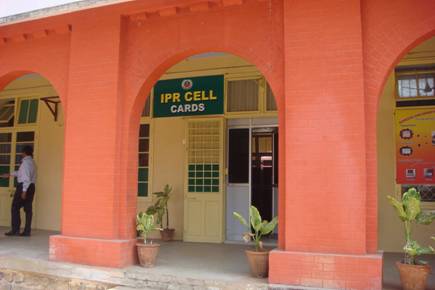
In TNAU , the Centre for Agricultural and Rural Development Studies is responsible for obtaining patent for the technologies developed in TNAU. At present, six inventions have obtained patent. They are listed below
Patents Obtained by TNAU
| S.No. |
Year of Patenting |
Name of the Scientists and Discipline |
Inventions |
Patent Number |
| 1. |
2003 |
Dr.S.Mohan, Professor of Agricultural Entomology |
A device to remove insect eggs from stored pulse seeds |
198434 |
| 2. |
2004 |
Dr.Chendrayan, Professor of Agricultural Microbiology |
Anaerobic microbial dissolution of lead and production of organic acids |
4758345 |
| 3. |
2004 |
Dr.K.Angappan, Associate Professor of Plant Pathology |
A process of preparing a bio fertilizer cum bio fungicidal composition |
191420 |
| 4. |
2005 |
Dr.P.M.M. David, Professor of Agricultural Entomology |
A multipurpose device for the management of insects and rodents |
201482 |
| 5. |
2006 |
Dr.R.Jagannathan, Professor of Agronomy |
A process for preparation of coconut fertilizer briquette |
210050 |
| 6. |
2007 |
Dr. G.Kathiresan, Professor of Agronomy |
Sugarcane detrasher |
204273 |
| 7. |
2011 |
Dr.V.Udayasuriyan, Professor of Biotechnology |
A chimeric cry2A protein of Bacillus thuringiensis with higher insecticidal activity and a method for its development |
244427 |
| 8. |
2011 |
Dr.R.Balasaraswathi, Professor of Bio-technology |
CDNA gene encoding a protein with plant anti-viral property from Bougainvillea |
248606 |
| 9. |
2012 |
Dr.K.Kailappan, Professor of Agricultural Processing |
Process for the production of ready to cook mix from pearl millet |
250608 |
Updated Status of TNAU and Private Inventions as on 09.06.2014
| S.No. |
Name of the Inventors and Discipline |
Name of the Invention |
Date of Filing with Application Number |
Status |
| A. |
TNAU Scientists |
|
|
|
| 1. |
Dr.S.Manimegalai,
Associate Professor of Sericulture |
Bed disinfectant for management of silkworm diseases |
82/CHE/2006
Date of filing: 18.01.2006 |
Application is under Examination. Group: 2 (Biotechnology, Microbiology and Allied subjects) |
| 2. |
Dr.S.Raguraman, Professor of Agricultural Entomology |
Neem sweet P-60 EC for the management of insect pests |
744/CHE/2006 (Date of filing: 24.04.2006) |
Application Awaiting Examination |
| 3. |
Dr.C.Divakar Durairaj,
Professor of Farm Machinery |
A micro- processor controller stepper motor driven electro mechanical seed metering system |
1316/CHE/2006
Date of filing: 27.07.2006 |
Deemed to be Withdrawn U/S 11B(4) |
| 4. |
Dr.K.Thangavel, Professor of Agricultural Processing |
An equipment to continuously remove the seeds from Aonla Fruit |
1711/CHE/2007 (Date of filing: 03.08.2007) |
Application Awaiting Examination |
| 5. |
Dr.P.Subramanian
Professor of Environmental Science |
Bio-Mineralizer for composting of different Agro - waste |
1450/CHE/2007
Date of filing: 5.07.2007 |
Application is under Examination. Group:2 (Biotechnology, Microbiology and Allied subjects) |
| 6. |
Dr.P.Subramanian, Professor of Environmental Science |
Bio- Capsule for influencing Rhizosphere of plant system for better crop growth and agricultural productivity |
1451/CHE/2007
Date of filing: 5.07.2007 |
Application is under Examination Group:2 (Biotechnology, Microbiology and Allied subjects) |
| 7. |
Dr.S.Mohan, Professor of Agricultural Entomology |
A device to monitor stored grain insects in bag stacks |
1773/CHE/2008 (Date of filing: 24.07.2008) |
Application Awaiting Examination |
| 8. |
Dr.G.Kathiresan, Professor of Agronomy |
Herbicide Smearer |
238/CHE/2008 (Date of filing: 29.01.2008) |
Application Abandoned U/S 21(1) |
| 9. |
Dr.V.Udaya Suriyan, Professor of Biotechnology |
Novel gene of Bacillus thuringiensis encoding insecticidal protein |
476/CHE/2009 (Date of filing: 04.03.2009) |
Application not yet published |
| 10. |
Dr..Sundararajan Amutha,
Professor, Department of Human Development, HSC&RI, Madurai-625104. |
Coconut jelly making process and tender coconut jelly |
197/CHE/2009
Date of filing: 29.01.2009 |
Application Awaiting Examination |
| 11. |
Dr.M.Jawaharlal, Professor of Floriculture and Landscaping |
Export packaging technology for jasmine (Jasminum sambac (L) Ait.) flowers |
Date of filing: 14.05.2010 |
examination |
| 12. |
Dr.S.Mohandass, Professor of Crop Physiology |
Pink Pigmented Facultative Methylotroph (PPFM) Supplementation Technology for Mitigating Terminal Drought in Rice (Oryza sativa L.) |
2137/CHE/2010
Date of filing: 28.07.2010 |
Application Awaiting Examination |
| 13. |
Dr.S.Mohandass, Professor of Crop Physiology |
Drip Fertigation Technology for Aerobic rice (Oryza sativa) |
2138/CHE/2010 (Date of filing: 28.07.2010) |
Application Awaiting Examination |
| 14. |
Dr.R.Umarani, Associate Professor of Seed Science and Technology |
Technology for secondary protein extraction for seed treatment and foliar spray application |
845/CHE/2010
Date of filing: 29.03.2010 |
Application Awaiting Examination |
| 15. |
Dr.V. Udaya Suriyan
Professor of Biotechnology |
Synthetic DNA sequence for production of insecticidal Cry 2AX1 protein in plants |
3331/CHE/2010
Date of filing: 09.11.2010 |
Application Awaiting Examination |
| 16. |
Dr.R.Umarani, Associate Professor of Seed Science and Technology |
A seed pelleting mixture composition and seed pelleting protocol |
233/CHE/2011
Date of filing: 25.01.2011 |
Application Awaiting Examination |
| 17. |
Dr.R.Umarani, Associate Professor of Seed Science and Technology |
A machine for pelleting of seeds |
234/CHE/2011
Date of filing: 25.01.2011 |
Application Awaiting Examination |
| 18. |
Dr.G.Kathiresan, Professor of Agronomy |
Kathir Paddy Nursery for SRI |
2269/CHE/2011 (Date of filing: 01.07.2011) |
Request for Examination not filed |
| 19. |
Dr.R.Velazhahan, Professor of Plant Pathology |
Herbal Formulation for Detoxification of Aflatoxins |
1987/CHE/2011 (Date of filing 13.06.2011) |
Application Not Yet Published |
| 20. |
Dr.M.Sivakumar, Professor of Plant Nematology |
Composition having nematicidal activity from Swieteniamahogany (Meliaceae) seed kernel |
1988/CHE/2011
Date of filing: 13.06.2011 |
Application Not Yet Published |
| 21. |
Dr.R.Jerlin, Associate Professor of Seed Science and Technology |
An accurate, economical, fast track, DNA finger printing based genetic purity testing technique for commercial seed lot |
2270/CHE/2011
Date of filing: 04.07.2011 |
Application Awaiting Examination |
| 22. |
Dr.R.Umarani, Associate Professor of Seed Science and Technology |
Designer seed tape |
3812/CHE/2011
Date of filing: 08.11.2011 |
Application Awaiting Examination |
| 23. |
Dr.R.Murugesan, Professor of Agricultural Microbiology |
Process for separation of Amino mass, minerals and chitin from silkworm pupae bio-waste |
3890/CHE/2011
Date of filing: 14.11.2011 |
Application Awaiting Examination |
| 24. |
Th.A.V.Gnanasambandam Gnanasambandam
Agricultural Microbiology |
Spices Wine |
2423/CHE/2011 (Date of filing: 15.07.2011) |
Application Awaiting Examination |
| 25. |
Dr.T.Jeyaraj, Director,
TRRI, Aduthurai |
Tree Killer |
4640/CHE/2011 (Date of filing: 29.12.2011) |
Application Not Yet Published |
| 26. |
Dr. R.Poorniammal, Research Associate of Agricultural Microbiology |
Process for producing a natural yellow pigment by submerged fermentation of a fungi Thermomyces sp |
4456/CHE/2011
Date of filing: 19.12.2011 |
Application Not Yet Published |
| 27. |
Dr.K.S.Subramanian, Professor of Nano Science and Technology |
Nano-fertilizer formulation for smart delivery of nitrogen |
4563/CHE/2011
Date of filing: 26.12.2011 |
Request for Examination not filed |
| 28. |
Dr.C.R.Ananda kumar
Professor of Plant Breeding and Genetics, Madurai – 104 |
Relative water position method for early identification of drought resistance in rice cultivars |
3383/CHE/2011
Date of filing: 29.09.2011 |
Request for Examination not filed |
| 29. |
Dr.G.Kathiresan, Professor of Agronomy |
Cane Seedlings Pruner |
241/CHE/2012 (Date of filing: 20.01.2012) |
Request for Examination not filed |
| 30. |
Dr. M. Muthulakshmi, Senior Research Fellow of Plant Nematology |
Bio formulation of egg parasitic fungi (Engyodontium aranearum) for control of potato cyst nematodes |
399/CHE/2012
Date of filing: 02.02.2012 |
Application Awaiting Examination |
| 31. |
Dr.K.Kailappan, Professor of Agricultural Processing |
A thresher cum winnower device |
0013/DEL/2012 (Date of filing: 23.12.2011) |
Application Does Not Exist |
| 32. |
Dr.G.Kathiresan, Professor of Agronomy |
Low Cost Triangular Pointer for System of Rice Intensification (SRI) |
5113/CHE/2012
Date of filing: 07.12.2012 |
Application Not Yet Published |
| 33. |
Dr. P.Gomathinayagam,
Professor of Plant Breeding and Genetics |
Induced Seminal Rooting (ISR) Technique for Rapid and Mass Screening of Rice Genetic Accessions for Deep Root System |
161/CHE/2012
Date of filing: 16.01.2012 |
Request for Examination not filed |
| 34. |
Dr.Ganeshram, Professor of Plant Genetic Resources |
Cut Grain Dip (CGD) method with Rapid Amylose Detection Solution (RADS) for determining Amylose Content (AC) in Rice |
1266/CHE/2012
Date of filing: 30.03.2012 |
Application Awaiting Examination |
| 35. |
Dr.S.Vincent, Professor of Crop Physiology |
Plant Growth Regulator Consortia for coconut |
1604/CHE/2012 (Date of filing: 24.04.2012) |
Application Not Yet Published |
| 36. |
Dr.S.Vincent, Professor of Crop Physiology |
Plant Growth Regulator Consortia for Pulse |
1609/ CHE/2012 (Date of filing: 24.04.2012) |
Application Not Yet Published |
| 37. |
Dr.S.Vincent, Professor of Crop Physiology |
Plant Growth Regulator for Groundnut |
1605/CHE/2012 (Date of filing: 24.04.2012) |
Application Not Yet Published |
| 38. |
Dr.S.Vincent, Professor of Crop Physiology |
Nutrient Mix to Improve maize yield |
1606/CHE/2012 (Date of filing: 24.04.2012) |
Application Not Yet Published |
| 39. |
Dr.S.Vincent, Professor of Crop Physiology |
Nutrient Mixture to Reduce Iron Chlorosis in Sugarcane |
1607/CHE/2012 (Date of filing: 24.04.2012) |
Application Not Yet Published |
| 40. |
Dr.S.Vincent, Professor of Crop Physiology |
Nutrient Mix to Increase Cotton Yield |
1608/CHE/2012 (Date of filing: 24.04.2012) |
Application Not Yet Published |
| 41. |
Dr.S.Vincent, Professor of Crop Physiology |
Nutrient Mix to Increase Yield in Banana |
1610/CHE/2012 (Date of filing: 24.04.2012) |
Application Not Yet Published |
| 42. |
Dr.Sangeetha Panicker,
Professor of Plant Pathology |
Chemical Sterilization method of Mushroom spawn production |
2796/CHE/2012 (Date of filing: 10.07.2012) |
Application Not Yet Published |
| 43. |
Th. A.V.Gnanasambandam,
Agricultural Microbiology |
Herbal Wine |
4535/CHE/2012 (Date of filing: 31.10.2012) |
Application Not Yet Published |
| 44. |
Dr.S.Prabhu, Assistant Professor of Plant Nematology |
Water Soluble gel formulation comprising of entomopathogenic nematodes and its preparation |
5227/CHE/2012
Date of filing: 14.12.2012 |
Application Not Yet Published |
| 45. |
Dr.R.Murugesan, Professor of Agricultural Microbiology |
Synthesis of protein hydrolysates through bacterial extraction from Azolla biomass |
3612/CHE/2012
Date of filing: 31.08.2012 |
Application Awaiting Examination |
| 46. |
Dr.R.Murugesan, Professor of Agricultural Microbiology |
Bacterial fermentation process for extraction of protein hydrolysate from yeast biomass |
3712/CHE/2012
Date of filing: 31.08.2012 |
Application Awaiting Examination |
| 47. |
Dr.R.Murugesan, Professor of Agricultural Microbiology |
Method for control of sugarcane red root disease causing fungus |
3266/CHE/2012 (Date of filing: 08.08.2012) |
Application Not Yet Published |
| 48. |
Dr.W.Baby Rani, Associate Professor, of Agricultural Entomology |
Trap design for efficient trapping of brinjal shoot and fruit borer, Leucinodes orbonalis (GUENEE) |
3070/CHE/2012
Date of filing: 26.07.2012 |
Application Not Yet Published |
| 49. |
Dr.G.Kathiresan, Professor of Agronomy |
Natural warm water unit |
243/CHE/2013 (Date of filing: 18.01.2013) |
Application Not Yet Published |
| 50. |
Dr.R.Murugesan, |
Mass Multiplication Technique for Pink Pigmented Facultative Methylotrophs (PPFM) |
2641/CHE/2013
Date of filing: 18.06.2013 |
Application Not Yet Published |
| 51. |
Dr.P.Kamaraj, Assistant Professor of Farm Machinery |
Hand Operated Farm Tool for Removing Mother Shoots of Sugarcane Crop |
3037/CHE/2013
Date of filing: 08.07.2013 |
Application Not Yet Published |
| 52. |
Dr.R.Thaiyarajan, Assistant Professor of Farm Machinery |
Multipurpose Machine for Roto Tilling and Bush Cutting |
3653/CHE/2013
Date of filing:16.08.2013 |
Application Not Yet Published |
| 53. |
Dr.P.Srimathi, Professor
Professor of Seed Science and Technology |
Noni based agroceutical formulation for seed priming and foliar spray and its method of preparation |
4027/CHE/2013
Date of filing: 10.09.2013 |
Application Not Yet Published |
| B |
Students |
|
|
|
| |
Th.Khedikar Shirish Yograj, Ward No. 3, Behind Panchayat Samiti (P.O), Lakhani (Tk.), Bhandara (Dt.), Maharashtra – 441804. |
Wind elevation angle recorder (WINDEAR) |
109/MUM/2013
Date of filing: 14.01.2013 |
109/MUM/2013
Date of filing: 14.01.2013 |
| |
Th. S.K.Arun Vishwanathan, M.Tech (Food Processing and Marketing) Department of Plant Bio-Technology |
Prebiotic Sugar Cream Biscuit and its Method of preparation |
1753/CHE/2013
Date of filing: 22.04.2013 |
Application Not Yet Published |
| |
Th. M. Ramprasad, No.11/1A, Sounderlingam Pillai street, Solavanthan, Madurai-625 214. |
Isolation of PGPR and production of indole acetic acid for plant growth by the application of Pseudomonas species |
4455/CHE/2012
Date of filing: 26.10.2012 |
Request for Examination not filed |
| C |
Entrepreneurs |
|
|
|
| |
Th.R.Rajkumar, No. 15c (3/4), 9thcross, Annanagar, Peelamedu, Coimbatore-4 |
Thoroughbred Roof Insulation |
2893/CHE/2010
Date of filing: 12.10.2010 |
Application Does Not Published |
| |
Th.M.P.Raj Kumar, Incubatee,TNAU, Coimbatore |
Mobile based Irrigation Scheduling Equipment |
3041/CHE/2010 (Date of filing: 14.10.2010) |
Application Not Yet Published |
| |
Th. S. Duraisamy, No.1/28, Kumaramangalam, Kulithalai Tk, Karur Dt – 639 107 |
Moving lever Hand Weeder |
3748/CHE/2011
Date of filing: 16-06-2011 |
Application Awaiting Examination |
| |
Th.S.Selva Kumar, , Pappara-patty(Tk.),Dharmapuri-636903 |
Tractor drawn manual turmeric rhizome planter |
5370/CHE/2012 (Date of filing: 24.12.2012) |
Application Not Yet Published |
| D |
Other Institutions |
|
|
|
| |
Dr. Shubashini Krishnan Sripathi, Avinashilingam University, Coimbatore |
Cosmeceutial products based on allantoin rich extracts of Pisonia alba |
84/CHE/2012
Date of filing: 09.01.2012 |
Request for Examination not filed |
| |
Dr. Shubashini Krishnan Sripathi, Avinashilingam University,Coimbatore |
Medicinal Products based on allantoin rich extracts of Pisonia alba |
85/CHE/2012
Date of filing: 09.01.2012 |
Application Not Yet Published |
Commercialization of TNAU - Technologies and Products
Tamil Nadu Agricultural University has developed many viable agro-technologies and products. Some are already commercialized and some awaiting opportunities. Hence, Directorate of Agribusiness Development is entrusted with the responsibility of commercialization of the TNAU products / technologies developed. Accordingly, through a series of meeting, five technologies have been short-listed initially for commercialization as a first phase. Based on that, approval of the University has been obtained to invite “Expression of Interest” from reputed companies to grant license for the production and marketing of the following TNAU products / technologies. Among them one patented product were also subjected to commercialization.
The highest offers quoted by the firms were approved by the university
.
Sl.No. |
Name of the product / technology |
OFFER approved by TNAU
(in words & figures) * |
1. |
TNAU Patent No.19834 – A device to remove insect eggs from pulse seeds |
Rs.10,000/- (Rupees ten thousand only) |
2. |
Preparation of “Ready to cook mix and food from pearl millet” – both technology and machine(applied for patent) |
Rs.5,000/- (Rupees five thousand only) |
Important terms and conditions are:
The license is granted for the production and marketing of certain TNAU products / technologies on NON- EXCLUSIVE basis only. The TNAU has the right to grant license to other companies for commercial production and marketing of the said technologies for which license is granted under this agreement. The firm may refer as TNAU technology/product in the packets / containers / sachets etc. The firm shall be responsible for maintaining the quality of the produce marketed under this agreement. But TNAU has the full right to check the quality of products / technologies produced and marketed by the company . All the IPR rights of the technology shall rest with TNAU only. At present, MoU has been signed with private firms for granting license for the production and marketing TNAU products / technologies they are as follows.
| Sl.No. |
Name of the product / technology |
Name of the firm |
| 1. |
TNAU Patent No.19834 – A device to remove insect eggs from pulse seeds |
M/s. KSNM Marketing, Teachers Colony, Kurumbapalayam, Vedapatti Post, Coimbatore – 641 007 |
| 2. |
Preparation of “Ready to cook mix and food from pearl millet” – both technology and machine |
M/s. Dhaniyalakshmi Agro Foods, 563 (Part), Rangai Gowder St.,
Coimbatore – 641 001 |
Institute like Rural Innovations Network (RIN) and L-Ramp are recognizing the efforts of rural inventors and are popularizing their technologies. A number of private firm are assisting in patent searches, patent filing and case filing.
|