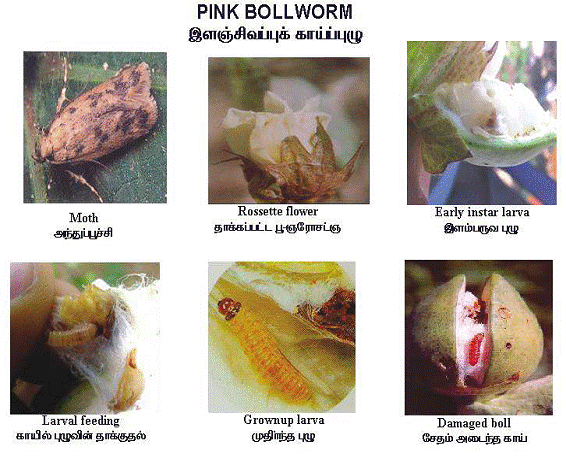
A small number of larval survival and reproduction of Helicoverpa armigera on Bt-cotton is not unexpected
Insects on Bt-cotton: desperate reactions
Bt cotton vis-à-vis environmental protection: An Indian Perspective
Bt Cotton in India -Prospects and problems
Bt cotton vis-à-vis environmental protection:
An Indian Perspective
S. Manickam, K. N. Gururajan and N. Gopalakrishnan
Central Institute for Cotton Research, Regional Station, Coimbatore, India
Abstract
Cotton the most important commercial crop of India, often referred as the White Gold, consumes more than 45% of the total pesticides used in our country. The most important insect pests that affect cotton production are jassids, white fly, aphids and thrips among the sap sucking pests and boll worms (American, Pink and Spotted) and Spodoptera among the leaf eating caterpillars. Of these cotton pests, the American boll worms alone cause yield reduction upto 40 – 70 % under severe incidence. The genetic resistance, one of the important pest management strategies, is available in cotton gene pool against the sap sucking pests, whereas such resistance is not available against the bollworms. Hence, an alternate strategy is explored to circumvent this problem by cloning and transferring the genes encoding the toxic crystal δ - endo toxin protein from the soil bacteriumBacillus thuringiensis. The Bt transgenic cotton (Bollgard of Monsanto) has thus been developed successfully in USA, which has the ability to control the bollworms during crop growth effectively.
Ever since three Bt cotton hybrids have been approved for commercial cultivation in India during 2002, there was a sharp increase in area under cultivation of such hybrids from a mere 72,000 ac in 2002-03 to 30,00,000 ha in 2006-07. So far, 59 Bt hybrids have been approved in different cotton growing zones by GEAC (Genetic Engineering Approval Committee, Government of India) after extensive field trials by All India Coordinated Cotton Improvement Project centres and RCGM trials in farmers’ fields.
Bt cotton hybrids exhibited excellent control of American Boll worm and reduced the use of insecticides leading to create eco-friendly environment without compromising on profitable yield. As compared to insecticide mediated control of bollworms, Bt cotton technology does not harm non-target beneficial insects; besides reduction in production cost, increase in profit, reduced farming risk and improved economic outlook for cotton are the highlights of this novel technology. Use of this technology is also helpful in improving wild life population, reduced run-off of insecticides, reduced air pollution and improved safety to farm workers and neighbourhood.
Introduction
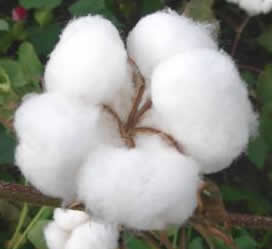
Cotton is the most important commercial crop of our country contributing upto 75% of total raw material needs of textile industry and provides employment to about 60 million people. India has the largest area under cotton cultivation with relatively low productivity primarily due to the large area under rainfed cultivation with inadequate supply of inputs. Area wise, India ranks first in world, whereas, it ranks second in production next to China. Only in India, all the four spinnable fibre yielding species of Gossypium viz., Gossypium hirsutum, G. barbadense, G. arboreum and G. herbaceum are cultivated commercially. Hybrid cotton cultivation in about 45% of total cotton area contributing 55% of production is a significant milestone achievement in Indian Cotton scenario.
Qualitative and quantitative transformation has taken place in cotton production in India, since independence. The production increased from a meager 2.79 million bales of 170 kg each in 1947-48 to a record of 24.0 million bales in 2005-06 (Table 1). At the time of independence, mostly short and medium staple cottons were produced. Today, India produces widest range of cottons from 6 to 120s counts, from non-spinnable coarse to medium, long, extra long and superfine cotton. The cotton productivity reached a plateau of around 300-330 kg lint per hectare during the past one decade, whereas it has been improved to more than 460 kg lint per hectare during the past two years.
Cotton is attacked by several insect pests reducing the crop yield to a greater extent. The insect pests that attack cotton crop may be classified into sap sucking insects (Aphids, Jassids and White fly) or chewing insects (Bollworms, leaf eating caterpillars etc.). Of the total pesticides used in Indian Agriculture, about 45 per cent is sprayed on cotton crop alone. To reduce pesticide usage in cotton, several strategies like use of Genetic Resistance to insect pests, Integrated Pest Management (IPM), Insecticide Resistance Management (IRM) etc. are advocated. In recent times, Bt cotton technology is found to be one of the best strategies to manage bollworms, the most important pest of cotton.
The Need for Bt cotton
The genetic resistance, one of the important pest management strategy, is available in cotton gene pool against the sap sucking pests such as jassids, whitefly etc and using this several resistant / tolerant varieties and hybrids have been developed and released in India. However, such kind of known resistance is not available against the bollworms. Hence, an alternate strategy is explored to circumvent this problem by cloning and transferring the genes encoding the toxic crystal δ - endo toxin protein from the soil bacterium Bacillus thuringiensis. The Bt transgenic cotton (Bollgard of Monsanto) has thus been developed successfully in USA, which has the ability to control the bollworms at the early stages of crop growth (upto 90 days) effectively.
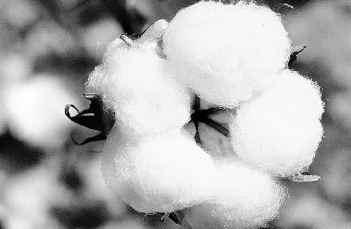
The first commercial Bt cotton variety was released in USA by M/S. Monsanto (Bollgard), which contains Cry 1Ac gene of Bacillus thuringiensis. Bt cotton is commercially grown in several countries like China, Australia, Mexico, South Africa, Argentina, India, Indonesia etc. World wide the area under Bt cotton keep increasing year by year. Overall, about 12% of the world cotton is now planted with Genetically Modified varieties / hybrids (GMO) and ICAC has estimated that his may rise to 50 % in 5-7 years.
Chronology of Bt Cotton in India
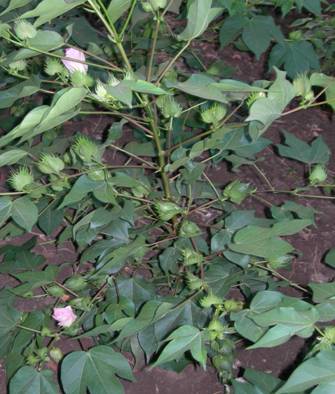
March 10, 1995: Department of Biotechnology (DBT) of the Government of India permits import of 100 gm of transgenic Cocker-312 variety of cottonseed cultivated in the United States by Mahyco. This variety contained the Cry 1 Ac gene from the bacterium Bacillus thuringiensis.
April 1998: Monsanto-Mahyco tie up. Monsanto given permission for small trials of Bt cotton 100 g per trial by Department of Biotechnology (DBT).
January 8, 1999: RCGM expresses satisfaction over the trial results at 40 locations and on April 12th directs MAHYCO to submit applications for trials at 10 locations before MEC.
2000-2002: ICAR trials were conducted at different AICCIP centres of Central and South Zone locations.
February 20, 2002: The Indian Council of Agricultural Research (ICAR) submits a positive report to the Ministry of Environment on the field trials of Bt cotton. It is now expected that the Genetic Engineering and Approval Committee (GEAC) of the environment ministry will approve commerical use of Bt cotton within a month.
March 25, 2002: Approval given for commercial cultivation to three Bt Cotton hybrids of M/s. MAHYCO by GEAC
In India, the area under Bt cotton hybrid has increased from a mere 29,307 ha during 2002 to 12,50,833 ha in 2005. During 2006, the area has increased upto 30,00,000 ha as projected by seed industry. The state wise break up of area covered under Bt hybrids are furnished in Table 2. It is estimated that roughly 40% of total area under cotton hybrids (approximately 100 lakh acres) can potentially be sown under Bt version, which translates into 40 lakh packets every year worth Rs. 640 crore. So far, 52 different Bt cotton hybrids were released for cultivation in India [Table 3].
Performance of released Bt cotton hybrids in ICAR trials
Comparative performance of Bt cotton hybrids developed by different private companies over the year (2001-2005) over different locations of three cotton growing zones of the country indicated superiority of Bt hybrids over their non-Bt counterparts in terms of both yield and contributing characters. Apart from seed cotton yield, they were also superior in number of bolls/plant, boll weight, seed index, lint index and ginning outturn.
The data on fibre quality of these hybrids indicated that there is no significant difference between Bt and non-Bt hybrids for fibre quality parameters viz., 2.5 % span length [mm], bundle strength [g/tex] at 3.2 mm gauge, and Micronaire. When we compare the fibre quality of these hybrids as against the requirements of the mills, as prescribed by South India Mills Association, most of the hybrids are spinnable between 30s and 40s counts.
Evaluation in multilocation and large scale field trials
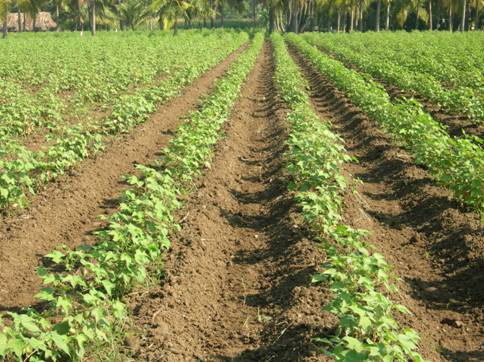
Large scale field trial results of four years from 1998 to 2002 indicated that Bt cotton was able to resist bollworm infestations thereby resulting in good boll retention and higher yields. Apart from the increase in yields there was a concomitant reduction in the use of insecticides due to Bt-cotton. Thus it was concluded that Bt-cotton has potential to improve the lives of cotton farmers through the provision of favourable environmental and economic consequences.
Bt cotton vis-à-vis environmental protection
Bt cotton cultivars exhibited excellent control of Helicoverpa zea and Heliothis virescens and reduced impact of insecticides to create eco-friendly environment without compromising yield. Since the Bt gene is effective during the early phase of crop growth, the bolls produced in the bottom most branches of the plant are retained fully. The lint obtained from the bottom 1/3rd part of the plant is reported to be of highest quality leading to the production of more quality fibres. Because of the retention of early formed bolls in the plant, the crop enters into senescence early and matures early compared to non-Bt counterparts. This ultimately helps in harvesting of seed cotton in two pickings.
The major emphasis was given to the control of boll worms in Bt hybrids as against their non-Bt counterparts by considering the number of times the Economic Threshold Level (ETL) crossed, total number of sprays given for the control of various insect pests under protected and unprotected conditions etc. In all these aspect, the released Bt cotton hybrids were found to be more efficient as compared to their non-Bt counterparts. As compared to insecticide control of bollworms, Bt cotton technology will not harm non-target beneficial insects, reduction in production cost, increased profit, reduced farming risk and improved economic outlook for cotton. Use of this technology is also helpful in improving wild life population, reduced run off insecticides, reduced air pollution and improved safety to farm workers and neighbourhood.
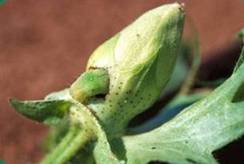 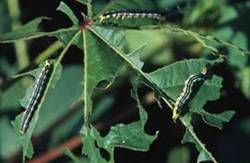
Reduced bollworm damage and reduction in insecticide sprays
Almost all the data available in India show that the Bt cotton hybrids crossed ETL for bollworm population in some locations only once after 90 days. Whereas the non-Bt and check hybrids crossed ETL more than three times at different locations from 60 DAS. The population of bollworms especially Helicoverpa armigera was significantly lesser in number in Bt cotton hybrids as compared to non-Bt and check hybrids. Amongst Bt hybrids, MECH-184 and MECH-12 recorded significantly lesser boll and locule damage compared to non-Bt and check hybrids, indicating that the two Bt hybrids exhibited higher tolerance to bollworm damage. There is a 50% overall reduction in the H. armigera larval population in Bollgard-MECH-162 compared to the non-Bt MECH-162. Bollgard-MECH-12, Bollgard-MECH-162 and Bollgard-MECH-184 were able to reduce larval populations of spotted bollworm (Earias vittella) up to 30-40% and pink bollworm (Pectinophora gossypiella) up to 60-80% in south India.
Large scale cultivation of Bt cotton has resulted in the significant reduction of insecticide use to the tune of 40 to 60% less than the intensity on the corresponding non-transgenic varieties. Several studies have evaluated the economic benefits accrued due to the cultivation of Bt transgenic cotton versus the corresponding non-transgenic cultivar. Apart from causing a reduction in the usage of insecticides all over the world Bt-cotton has significantly contributed to enhanced yields. Hence it has become very popular in all cotton growing countries of the world. One important advantage of Bt-cotton is that farmers rarely resort to prophylactic spray applications, which they do otherwise, in the absence of Bt-technology. In some regions of the country 7-10 prophylactic sprays per season are common on cotton. The total number of sprays averaged at 16-20 in some districts of Andhra Pradesh and Punjab during 1986-2001. The problem of pest management had become more complex due to bollworm resistance to insecticides, thereby causing enormous wastage of insecticide and subsequent environment pollution.
Yield increased substantially by adopting Bt-cotton and farmers in India were able to reduce at least 2-3 insecticide applications. Over the past four years bollworm infestation in India was low, thus reducing the need for insecticide applications. However, the benefits of Bt-cotton were more in other countries where bollworm infestation was high. Insecticide applications on Bt-cotton varieties were reduced up to 14 applications in China, 7 in South Africa and 5-6 in Indonesia and Australia (Table 5).
Biosafety tests and assessment of toxicity to non-target organisms
Biosafety tests indicated absolute safety to goats, cows, buffaloes, fish and poultry. Feed-safety studies with Bt cottonseed meal were carried out with goats, buffalos, cows, rabbits, birds and fish. The results revealed that the animals fed with Bt-cotton seed meal were comparable to the control animals in various tests and showed no ill-effects. These studies were carried out by the National Dairy Research Institute, Karnal; Central Avian Research Institute, Bareily; Industrial Toxicological Research Centre, Lucknow; National Institute of Nutrition, Hyderabad; Central Institute of Fisheries Education, Mumbai and GB Pant University for Agriculture and Technology, Pantnagar.
The Cry1Ac is mainly toxic to the bollworms (cotton bollworm, pink bollworm and spotted bollworm), semiloopers and hairy caterpillars. Bt-cotton expressing Cry1Ac is absolutely non-toxic to all other non-target organisms such as beneficial insects, birds, fish, animals and human beings. Laboratory and field studies carried out in India showed that the Cry1Ac protein deployed in Bt-cotton did not have any direct effect on any of the non-target beneficial insects. Work carried out elsewhere in the world also showed similar results. There was some evidence of a reduction in numbers of predators and parasitoids which specialise on the Bt controlled bollworms, but also of increases in numbers and diversity of generalist predators such as spiders. Generally the decrease in the parasitoid and predator populations were associated with decrease in the densities of the pest populations on account of Bt-cotton. Due to these changes in pest complex, farmers had to spray 3-5 times on bollgard as compared to 6-8 times on non-Bt cottons. Any effects could be assigned to the decrease in prey quality – for example with stunted Spodoptera litura caterpillars which had fed on Bt cotton. In the field situation, partial life studies broadly confirmed this finding. There was no increase in green vegetable bug numbers, aphid or whitefly numbers on Bt cotton. In general, such adverse effects as have been measured are very small when compared with the side effects of the spraying of conventional insecticides.
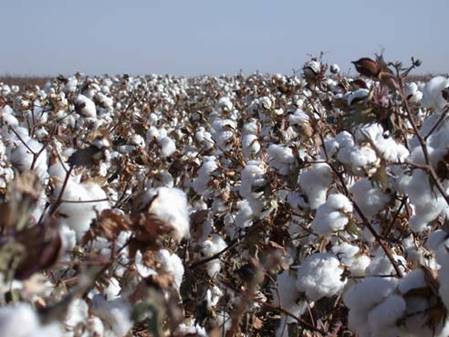
Post release field performance and enhanced economic benefits
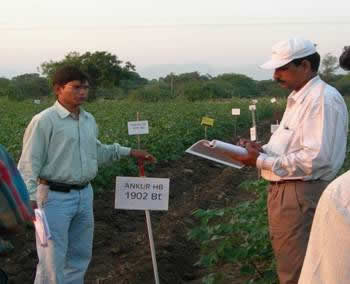
Results from extensive Bt cotton trials under farmer field conditions, conducted from 1998 to 2001 confirmed that Bt cotton with the Cry1 Ac gene provides effective and safe control of bollworm and related pests. Field trials have confirmed that, compared to conventional hybrids, Bt cotton can increase yields by up to at least 40%, reduce insecticide sprays by at least 50 % or more (decrease from 7 to 2 or 3 sprays on average) equivalent to savings of Rs 2500/hectare, and increase overall farmer income from Bt cotton from Rs 3500 to Rs 10,000 or more per hectare.
Mahyco commissioned a nationwide survey by ACNeilsen-ORG MARG in 2003. The survey covered 3,063 from Maharashtra, Madhya Pradesh, Andhra Pradesh, Karnataka and Gujarat (Table 6). The data showed that a yield increase by about 29% (range 18 to 40%) due to effective control of bollworms, a reduction in chemical sprays by 60% (range 51 to 71%) and an increase in net profit by 78% (range 66 to 164%) as compared to non-Bt cotton. The net profit was estimated to an average of Rs.7,724 (range Rs. 5,900 to 12,696) per hectare. Mahyco conducted an independent survey during 2003 to assess the performance of Bt-cotton in fields of 3000 farmers. Results showed an average net profit of Rs 18,325 (range 15,854 to 20,196) per hectare.
Field trials conducted by Mahyco during 2001, in 157 farms in 25 districts of Madhya Pradesh, Maharashtra and Tamilnadu showed that there were no changes in the insecticide use for sucking pest control, but at least three sprayings meant for bollworm control were saved due to the Bt-technology. Thus, insecticide use of cotton bollworm was reported to have been reduced by 83% and yield increase by a staggering 80%. Global estimates show that, Bt cotton caused an average net income increase of $ US 50/hectare in the USA, $357/hectare to $549/hectare in China and $25-51/hectare in South Africa.
Opportunities for the future
Keeping in mind the development of resistance to Cry 1Ac protein in insects, notable progress has already been made to diversify the transgene and to pyramid genes which are having different mode of action so that development of resistance is delayed. The genes available for exploitation include Bollgard II of Monsanto (Cry 1Ac + Cry 2Ab), VIP COT of Syngenta (VIP 3A) and Wide Strike of Dow Agro Sciences (Cry 1Ac + Cry 1F). The problem with regard to fibre quality of Bt hybrid as noted in MECH. 12 and MECH. 184 may be circumvented by involving a proper combination of parents to produce superior Bt cotton hybrid for both yield as well as fibre quality.
Table 1. Area, Production and Productivity of cotton in India
| Year |
Area (lakh ha) |
Production (lakh bales) |
Productivity (kg lint/ha) |
| 2000-01 |
81.5 |
167 |
319 |
| 2001-02 |
85.9 |
153 |
309 |
| 2002-03 |
73.9 |
158 |
322 |
| 2003-04 |
76.3 |
179 |
399 |
| 2004-05 |
89.2 |
243 |
463 |
| 2005-06 |
88.2 |
243 |
465 |
Table 2. Bt-cotton area (ha) in India, based on the number of packets (450 g) sold
| S. No. |
State |
2002 |
2003 |
2004 |
2005 |
| 1 |
Andhra Pradesh |
3,792 |
5,199 |
73,890 |
226,684 |
| 2 |
Madhya Pradesh |
1,482 |
12,968 |
87,894 |
142,062 |
| 3 |
Gujarat |
9,104 |
42,097 |
134,034 |
147,335 |
| 4 |
Maharashtra |
12,379 |
18,711 |
208,715 |
621,111 |
| 5 |
Karnataka |
2,178 |
3,547 |
20,443 |
28,888 |
| 6 |
Tamilnadu |
373 |
3,404 |
9,756 |
18,409 |
| 7 |
Haryana |
0 |
0 |
0 |
13,309 |
| 8 |
Punjab |
0 |
0 |
0 |
51,425 |
| 9 |
Rajasthan |
0 |
0 |
0 |
1,610 |
| Total |
29,307 |
85,927 |
53,4731 |
1250,833 |
Source: DBT, Government of India
Area under Bt cotton hybrids in 2006-07 ( Lakh hectares)
State
|
Total State Area |
Bt cotton hybrid Area |
% of Bt cotton Area |
Punjab |
6.18 |
2.81 |
45.5 |
Haryana |
5.33 |
0.42 |
7.9 |
Rajasthan |
3.08 |
0.05 |
1.6 |
Gujarat |
23.90 |
4.07 |
17.0 |
Maharashtra |
31.24 |
16.55 |
53.0 |
Madhya Pradesh |
6.66 |
3.02 |
45.3 |
Andhra Pradesh |
9.48 |
6.57 |
69.3 |
Karnataka |
3.56 |
0.80 |
22.5 |
Tamil Nadu |
0.94 |
0.32 |
34.0 |
Total |
91.37 |
34.61 |
37.9 |
Source : DOCD, Mumbai
Table 3. List of Bt cotton hybrids approved for commercial cultivation in India.
| Name of the company |
North Zone |
Central Zone |
South Zone |
| M/s. MAHYCO Seeds |
MRC 6301 [2005]
MRC 6304 [2005]
MRC 6025 (2006)
MRC 6029 ( 2006) |
MECH. 12 [(2002],
MECH. 162 [2002],
MECH. 184 [2002],
MRC 6301 [2005]
MRC 7301 BG II (2006)
MRC 7326 BG II (2006) MRC 7347 BG II (2006) |
MECH. 12 (2002)
MECH. 162 (2002)
MECH. 184 (2002)
MRC 6918 (HxB) (2005)
MRC 6322 (2005)
MRC 7351 BG II(2006)
MRC 7201 BG II (2006) |
| M/s. Rasi Seeds |
RCH 134 [2005]
RCH 317 [2005]
RCH 308 (2006)
RCH 314 (2006) |
RCH 2 [2004],
RCH 118 [2005]
RCH 138 [2005],
RCH 144 [2005]
RCH 377 (2006) |
RCH 2 (2004)
RCH 20 (2005)
RCH 368 (2005)
RCH 111 (2006)
RCH 371(2006)
RCHB 708 (HxB) (2006) |
| M/s. Ankur Seeds |
Ankur 651 [2005]
Ankur 2534 [2005] |
Ankur 651 [2005]
Ankur 09 [2005] |
-------- |
| M/s. Nuziveedu Seeds |
NCS 913 (2006)
NCS 138 (2006) |
Bunny [2005]
Mallika [2005]
NCS 913 (2006) |
Bunny (2005)
Mallika (2005)
NCS 913 (2006) |
| M/S Ganga Kaveri Seeds |
-------- |
GK 204 (2006)
GK 205 (2006) |
GK 209 (2006)
GK 207 (2006) |
| M/S Emergent genetics |
-------- |
Brahma (2006) |
Brahma (2006) |
| M/s Nath Seeds |
NCEH 6 (2006) |
NCEH 2 (2006) |
NCEH 3 (2006) |
| JK Seeds |
JKCH 1947 (2006) |
JK Varun (2006) |
JK Durga (2006)
JKCH 99 (2006) |
| Ajeet Seeds |
-------- |
ACH 33-1 (2006)
ACH 155-1(2006)
ACH 11-2 BG II (2006) |
ACH 33-1(2006)
ACH 155-1 (2006) |
| Prabhat Seeds Ltd |
-------- |
NPH 2171 (2006) |
PCH 2270 (2006)
NPH 2171 (2006) |
| Krishidhan Seeds |
-------- |
KDCHH 441 BG II (2006)
KDCHH 9810 (2006)
KDCHH 9632 (2006)
KDCHH 9821 (2006) |
KDCHH 9632 (2006)
KDCHH 9810 (2006) |
| Vikram Seeds |
-------- |
VICH 5 (2006)
VICH 9 (2006) |
VICH 5 (2006)
VICH 9 (2006) |
| Tulasi Seeds |
-------- |
Tulasi 4 (2006)
Tulasi 117 (2006) |
Tulasi 4 (2006)
Tulasi 117 (2006) |
| Vikki’s Agro Tech |
-------- |
VCH 111 (2006) |
-------- |
| Pravardhan Seeds |
-------- |
PRCH 102 (2006) |
-------- |
Table 4. Economics of Bt-cotton cultivation in ICAR trials 2001.
| Hybird |
Yield Q/ha |
Gross income Rs./ha |
Insecticide cost Rs./ha |
Net income Rs./ha |
| MECH-12 Bt |
11.67 |
21,006 |
1,727 |
16,854 |
| MECH-12 Bt |
13.67 |
24,606 |
1,413 |
20,768 |
| MECH-12 Bt |
14.00 |
25,200 |
1,413 |
21,362 |
| Local check |
8.37 |
15,066 |
2,845 |
12,221 |
| National check |
7.31 |
13,158 |
2,001 |
11,157 |
Table5. Spray application reduction on Bt cotton during 2002-2003
Country
|
Year of introduction |
Total cotton area (lakh ha) |
Area under Bt-cotton |
No. of insecticide sprays |
Lakh ha |
% |
Non-Bt |
Bt-cotton |
| USA |
1996 |
62.0 |
20.0 |
33 |
5 |
2 |
| Mexico |
1996 |
0.8 |
0.3 |
35 |
4 |
2 |
| China |
1997 |
48.0 |
15.0 |
31 |
20 |
7 |
| Australia |
1997 |
4.0 |
1.5 |
36 |
11 |
6 |
| Argentine |
1998 |
1.7 |
0.1 |
5 |
5 |
2 |
| S. Africa |
1998 |
0.4 |
0.2 |
45 |
11 |
4 |
| Indonesia |
2001 |
0.2 |
0.1 |
18 |
9 |
3 |
| Colombia |
2002 |
0.4 |
0.1 |
10 |
6 |
2 |
| India |
2002 |
85.0 |
2.8 |
3 |
5 |
2 |
Table 6. Results of the ACNeilsen-ORG MARG, 2003
State
|
Pesticide reduction |
Yield increase |
Net profit |
Rs/ha |
% |
Q/ha |
% |
Rs./ha |
% |
Andhra Pradesh |
4,594 |
58 |
4.9 |
24 |
12,717 |
92 |
Karnataka |
2,930 |
51 |
3.3 |
31 |
6,222 |
120 |
Maharashtra |
2,591 |
71 |
3.6 |
26 |
5,910 |
66 |
Gujarat |
3,445 |
70 |
2.9 |
18 |
8,564 |
164 |
Madhya Pradesh |
2,200 |
52 |
5.4 |
40 |
9,594 |
68 |
Average |
3,202 |
60 |
4.2 |
29 |
7,737 |
78 |
Source:
Fig1: http://monsanto.com.pk/july2k4/images/bullguard1.jpg
Fig2: http://newagnews.tamu.edu/dailynews/stories/SOIL/photos/0214BtcottonbanKaylr.jpg
Bt Cotton in India -Prospects and problems
Top
R.Ravikesavan 1 and K.Iyanar 2
1Associate Professor, 2Assistant professor
Department of Cotton, Tamil Nadu Agricultural University, Coimbatore - 641003
Introduction
Cotton the “White Gold” is an important cash crop of India which plays a vital role in the Indian economy. As an industrial crop, it supports millions of people through cultivation, processing and trade and contributes Rs.360 billion to the export income. The area occupied by cotton in recent years fluctuated between 8 and 9 million hectares in India. For over three thousand years India was recognized as the cradle of cotton industry. India thus enjoys the distinction of being the earliest country in the world to domesticate cotton and utilize its fibre to manufacture fabric. The cultivation, processing and trade industries support millions of people and contribute 40 to 45% of the export income.
The cotton production reached an all time high of 270 lakh bales and surpassed the production of US to rank second in the world. One of the reasons attributed for this growth is introduction of Bt cotton in India. Currently Bt cotton occupies an area of 37-40% of total cotton area in India. Globally nine countries are growing Bt cotton. Two developed countries (USA and Australia) and seven developing countries including three Asian countries (China, India and Indonesia) three from Latin America (Mexico, Argentina and Columbia) and South Africa. Bt cotton was commercialized in India in the year 2002.
Area under Bt cotton hybrids in 2006 – 07 (Lakh hectares)
| State |
Total State Area |
Bt cotton hybrid area |
% of Bt cotton area |
| Punjab |
6.18 |
2.81 |
45.5 |
| Haryana |
5.33 |
0.42 |
7.9 |
| Rajasthan |
3.08 |
0.05 |
1.6 |
| Gujarat |
23.90 |
4.07 |
17.0 |
| Maharashtra |
31.24 |
16.55 |
53.0 |
| Madhya Pradesh |
6.66 |
3.02 |
45.3 |
| Andhra Pradesh |
9.48 |
6.57 |
69.3 |
| Karnataka |
3.56 |
0.80 |
22.5 |
| Tamil Nadu |
0.94 |
0.32 |
34.0 |
| Total |
91.37 |
34.61 |
37.9 |
Cotton bollworms
The cotton bollworm complex in India includes the false American bollworm (Helicoverpa armigira), Pink bollworm (Pectinophora gossypiella), spotted bollworm (Earias vittella) and spiny bollworm ((Earias insulana). Among the above H.armigera is the most dominant and difficult to control chiefly due to its wide spread insecticide resistance, multivoltine and prolific pattern of feeding and high polyphagy. It is highly destructive and wasteful feeder in the sense that a single larva can damage squares and bolls and had a wide distribution.
Chemical insecticides are used extensively on cotton crop for control of insect pests, especially bollworms. The number of sprays per crop season may vary from 5 to 20 or even more. It is estimated that insecticides worth about Rs.30 billion are used annually in Indian Agriculture, of which, about Rs.16 billion are spent for the control of cotton pests and of this Rs.12 billion against boll worms alone. In terms of volume, about 54% of the total insecticides used in Indian Agriculture are sprayed on cotton crop. This indicates the economic importance of boll worms in general and H.armigera in particular.
Despite such huge efforts, bollworm control has not been generally satisfactory mainly because a pest like H.armigera has developed resistance to most of the currently recommended insecticides. Nevertheless farmers continue to use insecticides repeatedly as they have no option expect to ‘spray’ or ‘pray’. This had frustrated the farmers, scientists and policy makers alike. Bt. Cotton came at a time when they were desperately looking an alternative and dependable control measure.
Development of Bt – Cotton
The organism Bacillus thuringiensis was discovered in 1911 as a pathogen in flour moth, Thuringia, Germany. But later it was commercially utilized as biopesticides in France in 1938 and then in USA in 1950 for the toxin produced by this bacterium. From 1950 onwards the biopesticides containing this soil bacterium were popular. In 1992 the gene which is responsible for the toxin production was introduced to the cotton crop was grown in six locations in USA.
1996 |
- |
The crop was economically grown in USA in 73000 ha |
1997 |
- |
In China 1 million ha |
1998 |
- |
1.5 million ha (USA, Mexico, Australia, Argentina, China and South Africa) |
2001 |
- |
5 million farmers grown Bt-cotton in which 99% were in developed countries |
2002 |
- |
Commercialization of Monsanto’s Bt-cotton was approved |
2003 |
- |
Area increased approximately to 100,000 hectares in India |
Presently 9 countries grow Bt-cotton. Two developed countries (USA and Australia) and seven developing countries including three Asian countries (China, India and Indonesia) three from Latin America (Mexico, Argentina, Colombia) and South Africa (Barwale et al., 2004).
Genetics of Bt-Cotton
The bacteria Bacillus thuringiensis produce two types of toxins namely 1. Cry (Crystal) toxin encoded by different cry genes and 2. Kytolytic toxin. Over 50 genes have been noted to encode for cry toxin and they are sequenced for various studies. The various genes and their properties are tabulated here under.
Gene
|
Crystal shape |
Protein size (KD) |
Insect actively |
Cry I A(a), A(b), A(c), B, C, D, E, F, G |
Bipyramidal |
130 – 138 |
Lepidopteran larva |
Cry II (Sub group)
A, B, C |
Cuboidal |
69 - 71 |
Lepidoptera, diptera |
Cry III (Sub group)
A, B, C |
Flat irregular |
73 – 74 |
Coleoptara |
Cry IV (Sub group)
A, B, C, D |
Biopyrimidal |
73 – 134 |
Diptera |
Cry V – IX |
Various |
35 – 129 |
Various |
The commercial Bt–cotton available today contain genes from the isolate B-thuringiensis, ssp. Kurstakithat produces Cry I A(a), Cry I A(b), Cry I A(c), Cry IIA.
Mode of action of the toxin
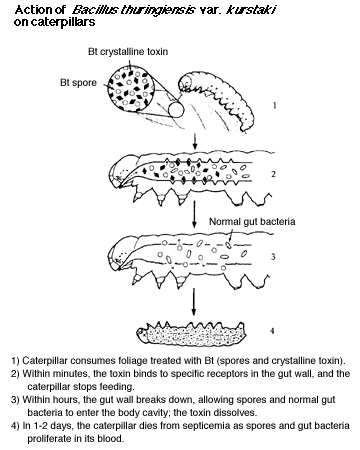
In plants the toxin is present in non-toxic (protoxin) form, which is insoluble at low pH. So the protein is not toxic to human beings and higher organisms and present in the protein size of 130 – 138 KD. Whereas the insect mid gut is having pH of >9 which is suitable for the protoxin to dissolve and change to toxic form of size 60 KD.
When cry proteins are ingested by insects, they are dissolved in the alkaline juices present in the mid gut lumen. The gut proteases process them hydrolytically to release the core toxic fragments. The toxic fragments are believed to bind to a specific high – affinity receptors present in the brush – border of mid gut epithelial cells. As a result, the brush border membranes develop pores, most likely non-specific in nature which causes their swelling of mid gut and larva stops eating. Due to which pH is lowered and bacterial spore starts germinating which causes the death of larva called septocaemia.
Use of Bt-Genes in Cotton
The Bt genes that are currently deployed are from two sources. Monsanto developed and deployed the Cry IA(c) gene in its Bollgard varieties, which are the most widely used in all nine countries that grow cotton. The second source is the Bt-fused gene that was developed by the public sector, Chinese Academy of Agricultural Sciences (CAAS) in Beijing, China (Jayaraman et al., 2005)
Genes utilized for the development of transgenic cotton hybrids in India
Company’s Name |
Gene utilised |
Mahyco |
cry1Ac |
Monsanto |
cry1Ac+2Ab |
Nath seeds |
cry1Ab+Ac fusion (China) |
JK seeds |
cry1Ac modified (IIT Khargpur) |
Syngenta |
vip3A +cry1 Ab |
Dow Agri. Science |
cry1 Ac + cry 1F, |
Metahelix |
cry1 C |
ICAR |
cry1 Aa3 |
|
cry1F |
|
cry1 Ia5 |
|
cry1 Ab |
|
cry1 Ac |
NBRI |
cry1 Ec |
First generation Bt-cotton
The most prevalent Bt-gene on a global basis Cry I A(c) was incorporated into Coker 312 cotton designated MON 531 by Monsanto and later named Bollgard cotton (first generation Bt-cotton). The high transformation efficiency was achieved in Coker 312 with Agrobacteium tumefaciens. The transformed Coker was than back crossed with lines from Delta and Pine land and other companies that had necessary agronomic qualities for commercial acceptance.
The advantages of the Cry IA (c) in bollgard over the Bt-cotton spray are as follows:
-
Active protein expressed in all plant parts.
-
Active protein expressed throughout the season, hence timing of insecticide applications in relation to an infestation is not an issue.
-
Less farmer exposure to insecticide.
-
Labour saving technology due to elimination or reduction of insecticide sprays.
-
Contribution to and provides the foundation for an IPM strategy.
Second generation Bt-cotton (Bollgard II cotton)
The Insect Resistance Management (IRM) strategy for Bt-cotton that Monsanto in conjunction with USDA developed second generation of improved Bt-cotton with two Bt-genes, now designated Bollgard II. The new product bollgard II, Event 15985 was developed using particle acceleration plant transformation procedures to add the Cry II A(b) gene to the cotton line DP 50B that already had the cry 1 A(c) gene. Hence the bollgard II cotton contains Cry 1 A(c) and Cry II A(b). The dual gene cultivars are expected to provide growers with a broader control over a wide variety of insects.
In 2002, Dow Agrosciences announced the development of new Bt-cotton with traits that confer broad spectrum resistance to lepidopteran pest of cotton. The new Bt cotton product contains the dual genes Cry IA(c) and Cry IF, transformed with Agrobacterium tumefaciens and incorporated through back crossing into several high quality commercial varieties of cotton.
Bt cotton (Bollgard) in India
Realizing the importance of Bt cotton MAHYCO took the initiate introducing this technology into India in collaboration with Monsanto company.
As per regulatory procedure, Mahyco sent its application to Dept. of Biotechnology (DBT), Govt. of India, in March 1995 seeking permission for introducing this technology. On obtaining approval, Mahyco received 100 gms of Bt-cotton seeds (variety Cocker 312) containing the Bollgard Bt gene Cry I A(c) form Monsanto, USA, in March 1996. After testing the efficacy of this gene, these were used in breeding programmes and 40 elite Indian parental lines were introgressed with Cry I A(c) gene by crossing with Bt gene donar parent obtained from Monsanto. Some of the ruling conventional hybrids were converted into Bollgard using the converted parental lines and tested for their performance and three hybrids were released for commercial cultivation in March 2002 (MECH – 12, MECH – 162 and MECH – 184). This approval was proceeded by a large number of laboratory studies and about 500 field trials carried out during 1996 – 2001 to demonstrate the safety an benefit of Bt cotton as per regulatory requirements (Mohan and Manjunath, 2002).
Development of Bt. Cotton in India
1995 |
Mahyco sent its application to Dept. of Biotechnology (DBT) seeking permission for introducing this technology. |
1996 |
Mahyco received 100 gms of Bt-cotton seeds (variety Cocker 312) containing the Bollgard Bt gene Cry I A(c) form Monsanto, USA |
1996 - 2002 |
After testing the efficacy of this gene, these were used in breeding programmes and 40 elite Indian parental lines were introgressed with Cry I A(c) gene by crossing with Bt gene donar parent
Demonstration the safety and benefit of Bt cotton as per regulatory requirements. |
2002 - 2003 |
Three Bt. Varieties namely, MECH 12, MECH 162 and MECH 184 were released commercially by Mahyco seed company.
3% cotton area under Bt. Cotton |
2003- 2004 |
Bt. Varieties failure report from Andhra Pradesh |
2004 - 2005 |
20 Bt. Strains released for commercial cultivation by various seed companies |
Evaluation of Bt cotton
There is a 3 Tier Mechanism for Evaluation of Transgenics in India
RDAC: Review development in biotech at national and international levels, recommend safety
regulation in India
- IBSC: Institute Biosafety Committee
- RCGM: Review Committee on Genetic Manipulation
- GEAC: Genetic Engineering Approval committee
SBCC: State Biotech Co-ordinate committee
DLC: District Level committee
Bt-cotton being a transgenic crop requires environmental clearance under rule 7-10 of the 1989”Rules for manufacture, Use, Import, Export and storage of hazardous microorganisms / Genetically Engineered Organisms or Cells” notified under the Environment (Protection) Act, 1986.
In India, two union ministries are involved in the regulation of GMO’s - Ministry of Science and Technology (MoST) and Ministry of Environment and Forest. The Department of Biotechnology (DBT) functions under MoST. Two important committees namely Institutional Bio-safety Committee (IBSC) and Review Committee on Genetic modification (RCGM) work under the guidance of DBT. Another Major committee, namely Genetic Engineering Approval Committee (GEAC) is constituted under MoEF. These committees are represented by experts drawn from various fields and organization across the country and are responsible to ensure that proactive safety studies are carried out on GM products before they are approved for commercialization.
As per the direction and guidelines of the regulatory authorities, Mahyco carried out number of studies which includes molecular characterization of induced gene, biochemical characterization of expressed protein and Bt-protein expressed in Bt-cotton plants with regard to its potential for allergenicity, toxicity to non target organisms, gene flow and cross pollination, impact on soil microorganisms and food and feed safety evaluation of Bt cotton compared to non Bt-cotton seed.
Indirect consequences of Bt-Cotton
-
Insecticide use decline;
-
Reduced pyrethroids: Pink bollworm, mirid bugs & Spodoptera are re-emergingH. armigera & whitefly are taking a backseat
-
Parawilt: Some genotypes struggle with high boll retention, water imbalance, punctatum blood of hirsutum, undesirable heterosis (Mayee et al., 2004)
-
High expectations, less results from rainfed and less fertile soils
-
Susceptibility to sucking pests –Linkage drag!!
Difference between Bt. and Non Bt cotton
The results demonstrated the following benefits of Bt cotton.
- Good control of bollworm species
- Significantly higher boll retention and more yield than the control
- Reduction in chemical sprays for bollworm control (50% less than that required for conventional commercial hybrids.
- Induces earliness about 20 – 30 days than the non Bt.
- Substantial increase in net income to farmers.
- No adverse impact on non-target organisms and the adjacent non Bt cotton or other crops.
According to survey carried out by ACNEILSEN - ORG MARG in 2003, over 90% of bollgard users and over 40% of non-users expressed the intent to purchase bollgard seeds in the next season (Manjunath, 2004).
Hybrids released for South zone
Year |
2006 |
2007 |
BG I intra hirsutem hybrids |
22 |
27 |
BGII intra hirsutum hybrids |
2 |
8 |
BG I inter specific hybrids |
2 |
5 |
It is believed that perhaps the greatest challenge to the acceptance of Bt. cotton by the society would not be with the plants themselves but by the high expectations from the farmers if it is promoted unduly by making exaggerated claims. The scientific part of the development of Bt. cotton is well documented. But there could be high expectations emanating from the farmers and the society. It would therefore be very important to educate the farmers and the dealers in the right way so that they could aim for realistic expectations from Bt cotton. Farmers must be told that Bt cotton does not control all pests. It reduces the target pests substantially, but it does not eliminate or eradicate the sucking pests and all other pests. Consequently, there may be need for only one or two need based application of insecticides to control particularly sucking pests. While planting Bt. cotton, farmers must undertake extensive scouting of the field to decide and understand when supplemental sprays of chemical insecticides for control of cotton sucking pests are necessary. As this is a new technology for the country, such caution approach is called for to disseminate the technology in the Indian environment.
Furthermore, opposition to products of biotechnology stems from sheer ignorance or malice rooted in a hidden agenda. Many stakeholders are in the dark. It is high time that the scientists involved in the development of GM products and the biotech industry, which has been silent all the while, should come forward to promote awareness and educate the public and the farmers on the benefits of GM crops. The Central and State Governments should assume the role of leaders in creating public awareness about biotechnology.
References
Barwale, R. B., V. R. Gadwal, U. Zehr and B. Zehr. 2004. Prospects for Bt cotton technology in India.AgBioForum, 7(1&2): 23-26.
Jayaraman, K.S., Jeffrey L. Fox, Hepend Ji and Claudia Orellana. 2005. Indian Bt gene monoculture: Potential time bomb. Nature Biotech., 23(20): 158.
Manjunath, T. M. 2004. Bt-cotton: Safety Assessment, Risk Management and Cost-benefit Analysis. International Symposium on “Strategies for Sustainable Cotton Production- A Global Visison” 1. Crop Improvement, 23-25 Nov. 2004, UAS, Dharwad, Karnataka, pp: 366-369.
Mayee, C.D., P. Singh, Punit Mohan and D.K. Agarwal. 2004. Evaluation of Bt transgenic intra hirsutum hybrids for yield and fibre properties. Ind. J. Agric. Sci., 74(1):46-47.
Mohan, K. and T. M. Manjunath. 2002. Bt cotton – India’s first Transgenic Crop, Crop J. Pl. Biol., 29(3): 225-236.
Fig2: http://www.nysaes.cornell.edu/ent/biocontrol/pathogens/bt.diag.GIF
Fig3: http://www.thehindubusinessline.com/2006/05/20/images/2006052002550801.jpg
|
.png)